
India has already signed the OECD's global standard for automatic exchange of information between tax authorities two years back and once the new format is implemented, the country will follow the new protocols envisaged in it.

'The BJP's defining character is Hindutva. The party's political strategy is based on a combination of Hindutva+Development.'

The Coimbatore suburb has been growing significantly due to strong economic policies, says Naveen Nandwani.

Alleging that a government working against the citizens is at the helm, Rajya Sabha MP Kapil Sibal on Saturday announced a new platform 'Insaaf' to fight 'injustice' prevailing in the country and called on everyone, including Opposition parties' chief ministers and leaders, to support him in his endeavour.

India scripted history as the ambitious third Moon mission of the Indian Space Research Organisation (ISRO) touched down on the Moon's south pole, propelling the country to an exclusive club of four and making it the first nation to land on the uncharted surface.
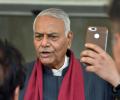
He said his 'Rashtra Manch', a political action group, would start a movement against the policies of the Centre.
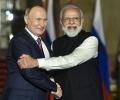
'A lot has been done under the leadership of PM Modi. He is a patriot of his country. His idea of 'Make in India' matters both economic wise and in ethics. Future belongs to India, it can be proud of the fact that it's the largest democracy in the world,' the Kremlin said at Valdai Discussion Club.
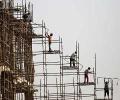
The optimism in global markets could help India as the rebound in GDP is expected to continue and get more broad-based.

'The regime -- and particularly the home ministry under Amit Shah -- have sought to suppress and destroy these struggles through intimidation, bullying, threats, through false cases, arrests, custodial torture, the use of draconian laws like the UAPA.'
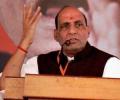
The Bharatiya Janata Party on Thursday demanded a statement from the prime minister on media reports about the government's 'decision' to allow an American company to install a nuclear reactor diluting the provisions of Nuclear Liability Bill.

Observing that there is liquidity overhand of Rs 13 lakh crore in the system, RBI Governor Shaktikanta Das said on Friday that the exceptional measures undertaken during pandemic will be dealt in sync with macroeconomic developments to preserve financial stability. Since the onset of the pandemic, the Reserve Bank has maintained ample surplus liquidity to support a speedy and durable economic recovery, he said while announcing the outcome of the Monetary Policy Committee (MPC) meeting. The level of surplus liquidity in the banking system increased further during September 2021, with absorption under fixed rate reverse repo, variable rate reverse repo (VRRR) of 14 days and fine-tuning operations under the liquidity adjustment facility (LAF) averaging Rs 9 lakh crore per day as against Rs 7 lakh crore during June to August 2021, he said.

'That is not a democratic ideal obviously, but it is a practical reality.' 'It is a consistent feature of politicians in Pakistan that their rhetoric on the army softens the closer they get to the seat of power.'

It is mind-boggling to find our prime minister putting exports on the back-burner, says Jayanta Roy.

'There are many things we need to work on.' 'At the heart of it is, one, the extent of inequality, which is not good for democracy and nation; two, a structural decline on how a country ought to function, how people should be held accountable, whose role is what.'

Muzammil Patel and Rahul Murthi will answer all your start-up queries.

The speed at which he led the central bank in different areas -- ranging from internal reorganisation to inflation fighting, stabilising the currency, taking on rogue corporations, cleaning up bank balance sheets, and opening the sector -- makes one believe that Rajan knew he had only three years to do his job. A fascinating excerpt from Tamal Bandyopadhyay's MUST-READ Roller Coaster: An Affair with Banking.
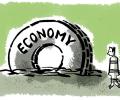
Moody's Investors Service on Friday projected India's growth at zero per cent for the current fiscal and said the negative outlook on sovereign rating reflects increasing risks that GDP growth will remain significantly lower than in the past. The outlook also partly shows weaker policy effectiveness to address economic and institutional issues, it noted in the update to its November 2019 rating forecast.

The Indian financial services space seems to be in a sweet spot as foreign investors have made a net investment of Rs 14,205 crore ($2.1 billion) in the sector in November amid strong credit growth and manageable non-performing loan portfolio. The investment comes following a net withdrawal of Rs 4,686 crore from financial services stocks in October on account of profit booking. Overall, foreign portfolio investors (FPIs) have made a net investment of Rs 36,238 crore in the country's equity markets in November.

Modi said his critics were seeing slowdown in the last two quarters but were ignoring that the BJP government had brought down inflation from 10% to 2.5%.

Sliding for the fourth straight day, the BSE Sensex shed 152 points in choppy trade on Wednesday amid mixed global cues ahead of the US Federal Reserve's policy decision.

Denouncing the United Progressive Alliance government as a "failure" on all fronts, the Bharatiya Janata Party on Friday came out with a scathing "chargesheet" on its 10-year rule that accused Sonia Gandhi and Rahul Gandhi of being equally guilty of all ills by exercising authority without responsibility.

An increase in government spending on the healthcare sector - from the current 1 per cent to 2.5-3 per cent of GDP - as envisaged in the National Health Policy 2017 could reduce out-of-pocket expenditures, as per the Economic Survey 2020-21. The rise in public spending can lead to a reduction in expenditures from 65 per cent to 30 per cent of overall healthcare spend, it noted. The Economic Survey said that for the country to effectively respond to future pandemics, the country's health infrastructure needs to be agile. Given its potential to provide healthcare access in remote areas, telemedicine needs to be harnessed to the fullest by especially investing in internet connectivity and health infrastructure, it added.

The rupee rose by 12 paise to close at 79.78 against the US dollar on Monday due to a weak dollar in overseas markets and an improved appetite for riskier assets. Stronger regional currencies also supported the rupee sentiment ahead of the US Fed policy decision on Wednesday. Weak domestic equities and FII outflows, however, capped sharp gains. At the inter-bank forex market, the local unit opened at 79.86 against the greenback and moved in a range of 79.70 to 79.87 in the day trade.

'...it gets a survey report that they are going to lose elections.' 'The fear of losing elections will make them immediately conduct a caste census.'

'He could indeed survive [the no confidence vote] even as he faces his biggest political test.'

'Event management can distract from, but not permanently mask, execution failures,' points out Rathin Roy, director, National Institute of Public Finance and Policy.

There are conflicting signs on India's investment cycle.

...Is this a virus more dangerous than Covid-19, asks Ajit Balakrishnan.

Once the impact of all policy changes made by the new Indian government and investments in key areas is felt, the country will see significant growth.

The BJP calling the Congress a "torn old party" moving towards a stage where its relevance and necessity will be completely lost.
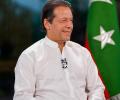
In an interview with the Financial Times following an assassination attempt this month, Khan said he no longer 'blamed' the US and wants a 'dignified' relationship if re-elected.

'I was amazed at how tasty it was.' 'They did a good job with millets and lentils, which Mr Modi liked.'
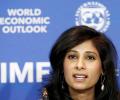
The IMF on Tuesday cut India's economic growth forecast by 0.5 percentage points to 9 per cent for the current fiscal year, with its chief economist Gita Gopinath saying that the slight downgrade is mainly due to the impact of the spread of the Omicron variant. "If you look at the 2021-22 fiscal year, we have a slight downgrade of -0.5 percentage points and for the next fiscal year 2022-23 we have a slight upgrade of 0.5 percentage points. So, growth for the previous fiscal year is now nine per cent and for this year now is at nine per cent. We moved it up slightly," Gopinath told reporters during a news conference in Washington. In its latest update of World Economic Outlook on Tuesday, the International Monetary Fund has cut India's economic growth forecast to 9 per cent for the current fiscal year ending March 31, joining a host of agencies which have downgraded their projections on concerns over the impact of the spread of Omicron on business activity and mobility.

'Economy is leading the way as far as the relationship between the two countries is concerned'.

'Let the high price of onions clear the market, matching supply with demand.' 'Let onion growers keep exporting -- we are the world's largest onion exporter, export 10% of our production,' advises Naushad Forbes.

Netaji Subhas Chandra Bose had formed this government and taken oath as prime minister on October 21, 1943."
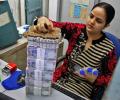
'The Budget numbers presented severely underestimate the magnitude of the unstated fiscal crisis that we went through in 2018-2019, which cannot be conceivably be fully reversed in 2019-2020,' points out Rathin Roy, director, National Institute of Public Finance and Policy.

In the 15-year dataset, the researchers noted an average of 7.8 incursions per year even though the Indian government's estimates are much higher.

Moody's on Thursday raised India's GDP forecast for the calendar year 2020 upwards to -8.9 per cent contraction from -9.6 per cent contraction forecast earlier. Similarly, India's GDP forecast for the calendar year 2021 has been revised upwards to 8.6 per cent from 8.1 per cent projected earlier. The report released by Moody's Investors Service attributed the reason behind better growth to the falling of coronavirus cases in the country.

'Rahul inspired Indian industry with an ethos, an ethos of being more confident, more independent, more thorough, more competitive, more generous, more public-spirited, and more national and more international all at once,' remembers Naushad Forbes.
 © 2026 Rediff.com - Advertise with us - Disclaimer - Privacy Policy - Sitemap - Feedback - About us - Terms of use - Grievances